Featured

Powerful Yoga Mudra

Mudras are symbolic hand gestures or postures that are often used in Hinduism, Buddhism, and other Indian spiritual practices. These gestures are believed to have specific meanings and effects on the body’s energy flow, emotions, and consciousness. Mudras are commonly used during meditation, yoga, and ritualistic practices to enhance concentration, promote healing, and facilitate spiritual growth.

In Indian traditions, the human body is considered to be a microcosm of the universe, with the fingers representing different elements, energies, and qualities. By arranging the fingers in specific configurations, practitioners can supposedly tap into and manipulate these energies for various purposes. Mudras are typically performed by using the fingers of one or both hands, but they can also involve other body parts, such as the eyes, tongue, and whole body postures.

Mudras play a role in enhancing concentration, fostering healing, and facilitating spiritual development. Practitioners use these gestures to harness and manipulate subtle energies for various purposes, with each mudra having distinct significance and potential benefits. While deeply rooted in cultural and spiritual traditions, their effectiveness is often based on belief and anecdotal evidence, rather than scientific validation. Therefore, it’s advisable to learn and practice mudras under the guidance of experienced practitioners or knowledgeable teachers, especially if you’re new to these practices.

There are numerous mudras, each with its own significance and benefits. Some mudras are associated with balancing the body’s elements, while others are focused on stimulating particular energy pathways in the body.

Few Mudras as follows :

Adi Mudra
Anjali Mudra
Abhaya Mudra
Apana Mudra
Agni Mudra
Akash Mudra
Brahma mudra
Chin (Gnana) Mudra
Chinmaya Mudra
Dyana Mudra
Ganesha Mudra
Prana Mudra
Prithvi Mudra
Surya Mudra
Shoonya
Varuna Mudra
Vayu Mudra
Jalashaya Mudra

Adi Mudra:
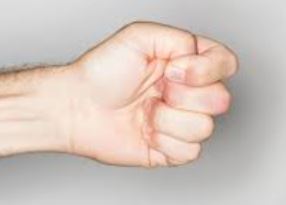
Adi mudra is considered the first mudra because it is the first position an infant can make with the hands. It is often used while practicing meditation, and is thought to aid in pranayama because it increases breathing and lung capacity, thus increasing oxygen flow throughout the body

The Adi Mudra activates all the elements (i.e earth , water, fire, air and ether) within the body. Clasp the thumb with all the four fingers of both hands, relax your breath. Simply relax your breath and then release the thumb, again do this.
It might have many several effects which include relaxation of the nervous system, snoring reduction, increase in blood circulation to the brain, and capacity of the lung. Adi Mudra locks and guides energy flow and reflexes to the brain.

It might have many several effects which include relaxation of the nervous system, snoring reduction, increase in blood circulation to the brain, and capacity of the lung. Adi Mudra locks and guides energy flow and reflexes to the brain

Anjali Mudra (Prayer Gesture):

Anjali Mudra is a common mudra performed by bringing the palms together in front of the chest in a prayer-like position. It represents unity, respect, and humility.

Namaste, two hands folded in a welcome greeting, is the salutation that Indians are globally welcomed with. Literal meaning – ‘I salute the divinity in you’

The coming together of both hemispheres of our brain when we do the Anjali Mudra channelizes our thought process temporarily. You can feel your mind experiencing positive thoughts during the practice.
Slow breathing during the process of Anjali Mudra and its connection to the heart improves the circulation of oxygen in the blood. It also balances the breathing pattern, calming an agitated mind instantly.
At the midpoint of our brain hemispheres lies the pituitary gland, which is considered the seat of intuition. Bringing your hands together not only balances the working of the adrenal and pituitary glands, but it also gives a jolt to your intuitive capabilities.
Bringing together of brain hemispheres improves their coordination and functioning.
Practicing Anjali Mudra regularly brings more awareness, enhances concentration, and calms the mind thereby relieving stress.
Physically it improves flexibility of the arm joints and wrists.
Aside from stimulating the Anahata chakra , the regular practice of Anjali Mudra is seen to stimulate the Ajna chakra as well. Anahata Chakra is located in the center of our chest and it’s stimulation helps us deal with our emotions in a better way. Ajna Chakra is located in the middle of the eyebrows and is the concentration center of our body. Stimulating it increases our focus and memory prowess.

Apana Mudra (Energy Gesture):

Apana Mudra involves touching the tip of the thumb to the tip of the middle and ring fingers, while the other fingers are extended. It is said to help with detoxification and balancing the body’s energies

Apana Mudra is believed that practicing a mudra properly may help in awakening the Goddess sleeping at the door of Lord Brahma, the creator of the universe. Mudras are believed to be the key to good health.
Apana mudra is known to balance the root chakra and awaken the energy which helps us live our lives.
In Hindu rituals, Apana mudra is also a way of offering ‘naivedyam’ (during worship to God).
Apana mudra is also known as the purification mudra, as its regular practice regulates excretion and urination well.
Strengthening the immune system.

Abhaya Mudra :

The Abhaya Mudra “gesture of fearlessness” represents protection, peace, benevolence and the dispelling of fear. In Theravada Buddhism it is usually made while standing with the right arm bent and raised to shoulder height, the palm facing forward, the fingers closed, pointing upright and the left hand resting by the side.

This mudra, often used in blessings, signifies the transmission of healing vibrations.The Abhaya Mudra primarily activates the third eye chakra, associated with wisdom and healing.

This gesture is used to dispel fear and develop courage, highlighted by the name abhaya which is Sanskrit for “fearlessness.” Abhaya mudra is symbolic of safety, protection, peace and reassurance, and can be called upon during challenging times

Bhrama Mudra:

Brahma mudra is said to be mentioned in the ancient literature of Rigveda. In Sanskrit, the term brahma means divine or sacred and mudras define gestures for the hand, head and eyes

To perform Brahma Mudra:

Sit in a comfortable meditation posture with your spine straight.
Keep your hands on your thighs with your palms facing up.
Fold your thumbs inward so that they touch the base of their respective little fingers.
Wrap your other fingers over and around the thumbs to make fists.
Bring the knuckles of both fists opposing each other.
Gently press the knuckles against each other.
Rest your hands gently against the pubic bone, which is the area just below your navel.

Brahma mudra finds its potential benefits in the management of neck pain, blood pressure, diabetes and hypertension.

In Brahma Mudra, the practitioner moves the head in all 4 directions while producing the “Beeja” sounds (seed sounds) with exhalation. The 4 seed sounds are aaa, uuu, eee, and mmm which when combined together make the vibration of OM, the sound of the universe.

Brahma Mudra is believed to have several benefits, including:

Balancing Energy: This mudra is thought to balance the body’s energy and harmonize the flow of prana (life force).

Stimulating Muladhara Chakra: The positioning of the hands in Brahma Mudra is associated with the Muladhara chakra, which is the root chakra. Stimulating this chakra is believed to enhance feelings of stability and groundedness.

Mental Clarity: Practicing Brahma Mudra can help calm the mind, reduce stress, and improve concentration.

Enhancing Digestion: Some practitioners believe that this mudra can aid in digestion and alleviate digestive issues.

Spiritual Connection: Like many mudras, Brahma Mudra is also associated with enhancing one’s spiritual connection and inner awareness.

It’s important to note that the effectiveness of mudras can vary from person to person, and their benefits are often based on traditional beliefs and anecdotal evidence rather than scientific research.

Chin Mudra (Consciousness Gesture):

To perform Chin Mudra , the index finger is placed at the root of the thumb, with the other fingers extended. It is thought to promote focus and deepen meditation.

It is thought to promote focus and deepen meditation,Better retention and concentration power,Improves sleep pattern,Increases energy in the body,Alleviates lower backache.
The mudra represents spiritual enlightenment in the religions. Sometimes sadhus chose to be buried alive in this samadhi position. A 2700 old skeleton arranged like this was found at Balathal in Rajasthan, suggesting that something like yoga may have existed at that time. It is believed to enhance concentration, memory, and knowledge,Harmonizes the Nervous System.
Supports Pranayama Practices: This mudra is often used during pranayama exercises to regulate and control the breath. It can help redirect the flow of prana (life force energy) within the body.

It is believed that the practice of chin mudra may instill wisdom and spiritual enlightenment in an individual. Chin mudra may help to boost the immune system, regulate blood pressure, improve concentration and manage stress and depression. It may also protect against cancer and help in the case of insomnia.

Chinmaya Mudra:

In the Chinmaya Mudra, the thumb and forefinger form a ring, and the three remaining fingers are curled into the palms of the hands. Again, the hands are placed on the thighs with palms facing upwards, and deep comfortable Ujjayi(Deep) breaths are taken. Once more, observe the flow of breath and its effect.
Chinmaya Mudra is Sanskrit word which means “supreme awareness” , ” pure wisdom”. Improves the flow of energy in the body. Stimulates digestion.
It opens up the middle lobes of your lungs and aids absorption of food. Reduces stress and head aches, effective for back pain

Dhyana Mudra:

The Dhyana mudra is the gesture of meditation, of the concentration of the Good Law and the sangha. The two hands are placed on the lap, right hand on left with fingers fully stretched (four fingers resting on each other and the thumbs facing upwards towards one another diagonally), palms facing upwards; in this manner, the hands and fingers form the shape of a triangle, which is symbolic of the spiritual fire or the Three Jewels. This mudra is used in representations of Gautama Buddha and Amitabha.

Sometimes the dhyāna mudrā is used in certain representations of Bhaiṣajyaguru as the “Medicine Buddha”, with a medicine bowl placed on the hands. It is heavily used in Southeast Asia in Theravada Buddhism; however, the thumbs are placed against the palms. Dhyāna mudrā is also known as “samādhi mudrā” or “yoga mudrā”.

Gnyana Mudra (Knowledge or Wisdom ): Gnyana is done by touching the tips of the thumb and the index together, forming a circle, and the hand is held with the palm inward towards the heart. The mudra represents spiritual enlightenment in the religions. Sometimes sadhus chose to be buried alive in this samadhi position. A 2700 old skeleton arranged like this was found at Balathal in Rajasthan, suggesting that something like yoga may have existed at that time. It is believed to enhance concentration, memory, and knowledge

Karana Mudra:
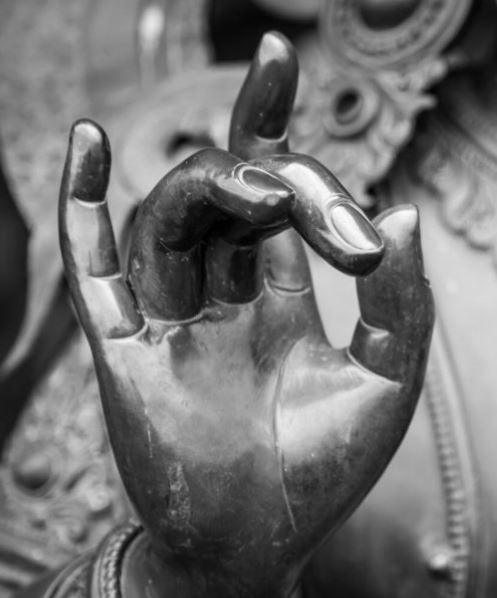
The karana mudrā is the mudra which expels demons and removes obstacles such as sickness or negative thoughts. It is made by raising the index and the little finger, and folding the other fingers. The difference is that in the Karana mudra the thumb does not hold down the middle and ring finger.

Shoonya Mudra (Emptiness Gesture):

This mudra involves placing the tip of the thumb against the base of the middle finger, while the other fingers are extended. It is believed to alleviate ear and throat-related issues.

Shoonya Mudra (Emptiness Gesture): This mudra involves placing the tip of the thumb against the base of the middle finger, while the other fingers are extended. It is believed to alleviate ear and throat-related issues.

Common Yoga Protocol Book-English Published y the Ministry of Ayush Government Of India –https://yoga.ayush.gov.in/api/uploads/assets/cyp/Common%20Yoga%20Protocol%20Book-English.pdf

Powerful Yoga by art of Living – Register

https://yoga.ayush.gov.in/

https://www.vedpuran.com/hasta_mudras.asp

https://isha.sadhguru.org/yoga/yoga-articles-yoga/mudras-science-types/
https://en.wikipedia.org/wiki/Mudra

Featured

Vedic Mantras

Vedas Introduction & Over view

Vedas Introduction

I admire for those who have complied and presented this valuable information .It is amazed to see the knowledge and understanding , and presented in a simple form of Vedas. Hats up to the precisions and meticulous evidences and approaches provided by our ancient Indian sadhus and rishis.

Explore the Vedas with an overview of the four Vedas, each of their four components, the Upavedas and the Vedanags

Rig Veda Samhita is the oldest extant Indian text. It is a collection of 1,028 Vedic Sanskrit hymns between 1500 and 1200 BC.

RigVeda Chanting

Rig Veda

Krishna Yajur Veda

Shukla Yajur Veda

Atarva Veda

Sama Veda

Vedic Mantras for Positive Energy Rare Vedic Chants Peaceful Vedic Chants

Contains the slokas from the Rigveda ,Yajurveda , Samaveda ,
Atharvaveda ,Sri Ganapathi Srothotram ,Namakam ,Chamakam ,Purusha Suktam

Featured

Finding Solutions from Bhagavad Gita

Featured

Healing Deep Music For Mind, Soul

The Music provides relaxation for Body and soul like as Holy Ganges Purifies.
Bhagavad Gita Sanskrit Guided Chant with Meaning
Deep Healing Music For Mind, Soul And Body | Music For Relaxation | Deep Sleep Music | Meditation

Dr Mangalampalli Balamurali Krishna Keerthanalu

Jagadish “Jaggi” Vasudev known by the honorific title Sadhguru, is an Yoga guru and proponent of spirituality. He has been teaching yoga in southern India since 1982. In 1992, he established the Isha Foundation in Coimbatore, which operates an ashram and yoga centre that carry out educational activities.

Ancient Indian Wisdom for True Happiness and Inner Peace!

Unlock timeless secrets of happiness through the ancient wisdom of Hindu scriptures. In this video, journey through the profound teachings of the Bhagavad Gita, Upanishads, and Vedas, discovering how principles of inner peace, contentment, and balance can create lasting joy in today’s fast-paced world.

Explore how these Good old insights can guide you toward a more fulfilling and meaningful life. Whether you’re on a path of personal development, seeking spiritual knowledge, or simply curious about Hindu philosophy, you’ll find valuable lessons for everyday living. Embrace the transformative teachings of Hinduism and learn how to weave true happiness into your daily life.

VEDANGAS

Vedangas are integral to the study and understanding of the Vedas. The Brihadaranyaka Upanishad mentions them as an integral part of the Brahmanas layer of the Vedic texts. These auxiliary disciplines of study arise with the codification of the Vedas in Iron Age India.

Vedangas are literally the limbs of the Vedas. Just as limbs provide support to the body, the Vedangas perform various supportive functions in the study of the Vedas. They are auxiliary disciplines associated with the Vedas.

There are six Vedangas (limbs of Vedas) evolved for the proper understanding of the Vedas. Vedangas are metaphorically referred to as “limbs of the Vedas. These are Shiksha (phonetics), Kalpa (rituals), Vyakarna (grammar), Nirukta (etymology), Chandas (metrics), and Jyotisha (astronomy).”

Each Vedanga is assigned a specific function, refers to different body parts performing distinct roles:

Shiksha (Phonetics): Ensures accurate pronunciation and recitation of Vedic texts.

Kalpa (Rituals): Provides guidelines for performing Vedic rituals and ceremonies.

Vyakarna (Grammar): Deals with the grammar and syntax of Vedic language.

Nirukta (Etymology): Focuses on the meanings and interpretations of Vedic terms.

Chandas (Metrics): Studies the poetic meters and structure of Vedic verses.

Jyotisha (Astronomy): Examines celestial phenomena and their significance in Vedic cosmology and astrology.

Shiksha :

Shiksha, one of the Vedangas, plays a crucial role in ensuring the accurate pronunciation and phonetics of the Vedic texts. It provides comprehensive guidelines and rules for the proper articulation of sounds and accents essential for the precise recitation of the Vedas. In the ancient tradition of Vedic chanting, maintaining the correct pronunciation was considered paramount to preserve the integrity and potency of the sacred verses. Shiksha meticulously details the correct pronunciation of every syllable, accent, and intonation, thus safeguarding the authenticity of the Vedic recitation.

Throughout history, various branches or Shakaas of the Vedas developed, each with its unique pronunciation and recitation style. These regional or lineage-specific variations were meticulously recorded and preserved in texts known as Pratishakaas, which literally translates to “instructions for the branches.” These Pratishakaas serve as invaluable repositories of knowledge, documenting the linguistic nuances and phonetic intricacies of different Vedic traditions. Despite the passage of time and the evolution of language, four Pratishakaas have managed to survive to the present day, offering invaluable insights into the rich tapestry of Vedic phonetics.

In addition to Shiksha, another Vedanga called Chandas is dedicated to the study of meter in Vedic poetry. While Shiksha focuses on the correct pronunciation and phonetics, Chandas delves into the rhythmic patterns, poetic meters, and structural intricacies of Vedic verses. However, unlike Shiksha, which has multiple surviving Pratishakaas, Chandas is represented by a single late text. Nonetheless, this text serves as a valuable resource for scholars and enthusiasts alike, providing insights into the poetic craftsmanship and aesthetic beauty of Vedic literature.

Together, Shiksha and Chandas illuminate different facets of the intricate art of Vedic recitation and poetic composition. They embody the meticulous attention to detail and reverence for tradition that characterize the study of Vedangas, ensuring the preservation and transmission of Vedic knowledge across generations.

Kalpa:

Kalpa, one of the Vedangas, is dedicated to the study of rituals and ceremonies prescribed in the Vedas. It serves as the “Arms of Veda Purusha,” symbolizing its integral role in Vedic tradition. Kalpa encompasses a vast array of manuals and guidelines that elucidate the intricate procedures for performing sacrifices, rites, and ceremonies according to Vedic tradition.

Within the realm of Kalpa, there are two main categories of texts known as Kalpa Sutras: the Sulaba Sutras and the Srauta Sutras. The Sulaba Sutras focus on the geometric and mathematical aspects of ritual altars, providing precise measurements and deductions for their construction. On the other hand, the Srauta Sutras offer comprehensive guidelines for conducting sacrifices, outlining the intricate rituals, mantras, and procedures involved.

The Srauta Sutras, which form a subset of Kalpa, are further categorized into three types:

Śrautasūtras: These sutras are based on the Shruti, the sacred scriptures of Hinduism, and they instruct on the performance of grand sacrifices that require the use of three or five sacrificial fires. They provide detailed instructions on every aspect of these elaborate rituals, from the preparation of offerings to the chanting of mantras.

Smartasūtras: These sutras, based on Smriti or tradition, are divided into two classes:

Grhyasutras: They focus on domestic rites, including rituals associated with major life events such as marriage, birth, and name-giving. These sutras offer guidance on the proper conduct of household ceremonies and offerings made to the domestic fire.

Dharmasutras: These sutras primarily deal with customs, social duties, and ethical principles. They form the foundational texts of the Dharmashastra tradition, discussing the concept of dharma—the moral and ethical duties that govern human behavior. Notable Dharmasutras include those authored by Āpastamba, Gautama, Baudhāyana, and Vasiṣṭha. These texts provide detailed instructions on various aspects of righteous living, including the duties of individuals in different stages of life (āśramas), the responsibilities of kings, judicial matters, dietary regulations, expiations for offenses, funeral rites, and daily oblations.

In summary, Kalpa, through its various sutras and texts, serves as a comprehensive guidebook for practitioners of Vedic rituals and ceremonies, offering detailed instructions on every aspect of these sacred practices and elucidating the underlying philosophical principles of dharma.

Vyakarana:

Vyakarana, one of the Vedangas, is dedicated to the grammatical structure of the Sanskrit language, particularly as it relates to the Vedas. It is often referred to as the “Mouth of the Veda Purusha,” emphasizing its essential role in facilitating the understanding and interpretation of Vedic texts. Vyakarana delves into various aspects of Sanskrit grammar, including syntax, morphology, and semantics, enabling scholars to analyze and derive meaning from Vedic verses with precision.

The discipline of Vyakarana, also known as analysis and derivation, involves grammatically describing the Sanskrit language. Among the earliest examples of Vyakarana are Panini’s grammar, believed to have been composed around 400 BCE, and the Pratishakaas. The Maheswara Sutras, a set of fourteen sutras, are considered foundational to Sanskrit grammar and are believed to have originated from the rhythmic sounds of Nataraja’s Damaru (drum). These sutras serve as the cornerstone of grammatical analysis in Vyakarana.

Panini’s magnum opus, the Aṣṭādhyāyī, stands as a monumental work in the field of Vyakarana. Comprising four parts, the Aṣṭādhyāyī provides comprehensive insights into Sanskrit morphology and syntax:

Śivasūtra: This section focuses on phonology, providing notations for phonemes specified in fourteen succinct lines. It lays the groundwork for understanding the phonetic structure of the Sanskrit language.

Aṣṭadhyāyī: The core of Panini’s grammar, this section elaborates on morphology, offering intricate construction rules for forming complex words and sentences. It provides a systematic framework for analyzing the structure and composition of Sanskrit sentences.

Dhātupāṭha: This part contains a list of roots, classifying verbal roots into different categories based on their semantic and grammatical functions. It serves as a reference guide for understanding the fundamental building blocks of Sanskrit verbs.

Gaṇapāṭha: This section comprises a list of classes of primitive nominal stems, providing insights into the diverse forms and declensions of Sanskrit nouns. It aids scholars in identifying and categorizing nominal formations in Vedic texts.

Despite the loss of much early Indian grammatical work, Panini’s Aṣṭādhyāyī remains a monumental contribution to the field of Vyakarana, serving as the cornerstone of Sanskrit grammar and laying the foundation for subsequent grammatical studies. Through Vyakarana, scholars continue to unravel the linguistic intricacies of the Sanskrit language, further enriching our understanding of the profound wisdom contained within the Vedic scriptures.

Nirukta:

Nirukta, an important Vedanga, is dedicated to the interpretation of Vedic words and their etymology. It is often referred to as the “Ears of Veda Purusha,” symbolizing its role in providing insights into the meanings and derivations of Vedic terms. Nirukta aids in understanding the symbolic and metaphorical aspects of the Vedas by unraveling the deeper meanings embedded within the language of the scriptures.

Nirukta primarily focuses on elucidating the meanings and origins of Vedic words, shedding light on their etymology and semantic nuances. It serves as a key tool for deciphering the linguistic richness of the Vedas, enabling scholars to unravel layers of meaning and symbolism encoded within the ancient texts. By delving into the roots and derivations of Vedic vocabulary, Nirukta facilitates a deeper understanding of the cultural, philosophical, and religious concepts conveyed in the Vedas.

A significant aspect of Nirukta is the Nighantu, a collection of words compiled by the renowned sage Yaska around 600 BCE. The Nighantu serves as a lexicon or glossary of difficult words found in the Vedas, providing valuable insights into their meanings and usage. While several commentaries on the Nighantu exist, Yaska’s commentary remains the most prominent and widely studied.

One of the fundamental principles of Nirukta is the concept that all names originated from verbs. This principle underscores the dynamic nature of language and the inherent connection between linguistic expression and action. By tracing words back to their original roots in verbs, Nirukta illuminates the profound interplay between language, thought, and reality, offering deeper insights into the philosophical underpinnings of the Vedic tradition.

In essence, Nirukta serves as a gateway to the profound wisdom contained within the Vedas, unlocking the hidden meanings and spiritual truths encoded within the language of the ancient scriptures. Through its meticulous analysis of Vedic words and their etymology, Nirukta enriches our understanding of the timeless wisdom preserved in the sacred texts of Hinduism.

Chandas:

Meter, or Chandas, is an essential aspect of Vedic poetry, measuring and dividing Vedic Mantras based on the number of padas in a verse, which are often referred to as “Feet.” Each verse, hymn, or mantra is divided into a specific number of padas, and each pada is further divided by the number of syllables it contains. This distinction forms the basis of a distinct taxonomy within Vedic meter.

For instance, the Gayatri Chanda is a well-known meter consisting of three padas, each containing eight syllables, resulting in a total of 24 syllables in each stanza. Similarly, the Anuṣṭhup meter comprises four padas of eight syllables each, totaling 32 syllables in each stanza. Anuṣṭhup is recognized as the typical shloka of classical Sanskrit poetry, widely used in various literary compositions.

The study of Vedic meters traces back to ancient times, with the earliest references found in the Saankhyaayana Srauta Sutra. However, the classical work on meters is attributed to Maharshi Pingalacharya. He meticulously categorized Vedic meters and laid down the principles governing their composition and structure.

There are primarily seven Vedic meters recognized in classical Sanskrit literature:

  • Gayatri
  • Ushnik
  • Anushtubh
  • Brhati
  • Pankti
  • Trishtubh
  • Jagati

Before the contributions of Pingalacharya, several other scholars made significant contributions to the study of Chandas, including Koshtuki, Yaksha, Kaashyap, and Maandavya. Their works laid the foundation for the systematic analysis and classification of Vedic meters, paving the way for Pingalacharya’s seminal work.

In summary, the study of Vedic meters is integral to the understanding and appreciation of Vedic poetry. It reflects the intricate rhythm, structure, and linguistic beauty inherent in ancient Sanskrit literature, preserving the rich cultural heritage of India’s literary traditions across millennia.

Jyotisha:

Jyotisha, one of the Vedangas, is dedicated to the study of astronomy and astrology as they relate to the Vedic texts. It is often symbolized as the “Eye of Veda Purusha,” highlighting its role in providing insight into cosmic phenomena and their impact on human life. Through the knowledge of Jyotisha, ancient seers discovered the inner rhythm of cosmic movements and their correlation with the periodic developments and seasons of human existence.

The science of Jyotisha encompasses a wide range of celestial phenomena, including the transit of planets, the calculation of days and nights, and the determination of various seasons. It involves the study of celestial bodies such as planets, stars, and constellations, as well as their movements, rotations, and revolutions. Additionally, Jyotisha includes astronomical calculations used to determine auspicious times for rituals and ceremonies, guiding individuals in conducting their religious and spiritual practices.

According to the Rig Veda, Jyotisha is attributed to Lagadhara Acharya and consists of 36 verses. Similarly, the Yajur Veda Jyotisha, attributed to Shosha Acharya, comprises 34 verses. The Atharva Veda Jyotisha is presented as a conversation between Pitaamaha and Kashyapa, containing 14 chapters and 102 verses.

Varahamihira, a renowned astronomer and astrologer, made significant contributions to the field of Jyotisha. He authored the “Pancha Siddhantika,” which consists of five systems of Jyotisha: Pitamaha Siddhanta, Vasishta Siddhanta, Romaka Siddhanta, Paulisha Siddhanta, and Surya Siddhanta. These Siddhantas provided foundational principles for astronomical calculations and astrological predictions.

Another notable figure in the history of Jyotisha is Bhaskara Acharya, a mathematician and astronomer from the 12th century AD. He described the “Panchanga,” a comprehensive calendar system consisting of five elements: Tithi (lunar phase), Vaara (day of the week), Nakshatra (lunar mansion), Yoga (auspicious combination), and Karana (half of a Tithi). The Panchanga, developed by Bhaskara Acharya, remains widely used across India for determining auspicious timings and conducting various religious and cultural events.

In summary, Jyotisha plays a vital role in bridging the celestial and terrestrial realms, offering insights into the cosmic order and its influence on human life. It represents a synthesis of astronomical observations, mathematical calculations, and astrological interpretations, guiding individuals in navigating the complexities of existence in harmony with the cosmic rhythms.

The six Vedangas collectively furnish the essential tools and knowledge required for the accurate interpretation, recitation, and application of the Vedas in Hindu religious and ritual practices. These auxiliary disciplines serve as the supportive pillars of Vedic scholarship, offering indispensable guidance to scholars and practitioners

Moreover, the Vedangas are not merely academic pursuits but serve as living traditions, passed down through generations of scholars and practitioners. They play a crucial role in the preservation and transmission of Vedic knowledge, ensuring its continuity and relevance throughout ancient and medieval India. As custodians of this sacred heritage, scholars of Vedangas uphold the sanctity of Vedic traditions and contribute to the enrichment of Hindu religious and ritual practices.

Surya Mantra

Surya Mantra, Surya Namaskaram

Surya is worshipped as the supreme deity. Surya is the mythological father of Manu, Yama, the Ashvins , Karna, and Sugriva. The Puranas record that the weapons of the gods were forged from pieces trimmed from Surya, whose full emanation was too bright to bear. His power was conceived of as dispelling darkness, curing disease, and heating and illuminating the world. His wife, Usas—in some accounts, his mother or mistress—is the personification of dawn.
He is commonly represented in a chariot drawn by seven horses or by a single horse with seven heads, holding full-blown lotuses, his head surrounded by a nimbus or by rays. One of the most splendid temples dedicated to Surya is the 13th-century Surya Deul

Inner engineering by Sadhguru audiobook

NEW YORK TIMES BESTSELLER • Thought leader, visionary, philanthropist, mystic, and yogi Sadhguru presents the time-tested path to achieving absolute well-being, the classical science of yoga. Yoga is a sophisticated system of self-empowerment that is capable of harnessing and activating inner energies in such a way that your body and mind function at their optimal capacity. It is a means to create inner situations exactly the way you want them, turning you into the architect of your own joy by SADHGURU.

ARYABHATTA – Ancient Inventions

Excellent presentation, contribution from Aryabhatta is his extended Euclidian algorithm which can be used to find common factors, ideal for simplifying fractions consisting of large numbers

It Describes about :

Gitikada -Discoveries about planetary and time computations, Methods of writing of numbers, Units of measurements, calculations of earth’s rotations
Ganitapada – Inventions about mathematics for astrophysical commutation , Geometrical principles, progressions measurement of time, week day, determining planetary positions.
Kalakriyapada – discoveries about planetary positions and motion
Golapada – Inventions about geometric & Trigonometric Principles, Motions of Planets
Geospatial Computations.

Ancient cryptography – which was used in Ancient India

Cryptography is not always to hide secrets… ironically, it could be used to demonstrate things in a easier way…. this doc film, we explain why & how…. Cryptography was used in Ancient India.

Sanskrit is the most cryptic language and also a simple one too! In this documentary we tried to bring forward the cryptic angle of Samskrutam which is in SUTRAS.

.. Brief A History of Vedas..

Mind boggling, unknown facts of our Indian highly intellectual vast knowledge which has Elaborately described the Ancient Indian Education System in our Vedabhoomi

Thanks a lot for Project Shivoham which is Awesome ,well researched, precisely put together information, well presented..